

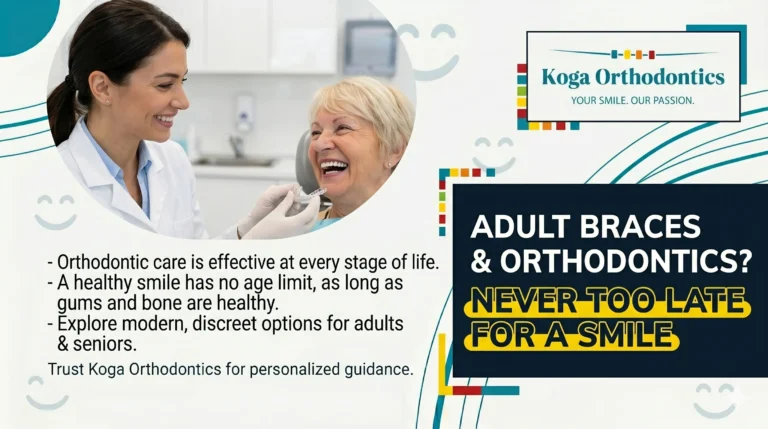
There is no age limit for orthodontic treatment. Whether you are 7 years old or 70, the core principle remains the same: if your teeth and gums are healthy, teeth can move. That said, timing does matter — and different stages of life come with different opportunities, challenges, and treatment options.
Whether you’re searching for adult braces in Monroe, LA, or exploring options for your child across Monroe and West Monroe, this guide walks through what orthodontic care looks like at every stage of life — so you know exactly where to start.
Starting Early: Why Age 7 Is the Right Time for a First Evaluation
Many parents assume they need to wait until their child has all their permanent teeth before visiting an orthodontist. In fact, the opposite is often true.
The American Association of Orthodontists (AAO) recommends that every child have their first orthodontic evaluation no later than age 7. At that age, a mix of baby teeth and permanent teeth are typically present — and that combination gives the orthodontist a clear picture of how the jaw is developing and whether any early intervention is needed.
Most children won’t need treatment at 7. However, some will benefit significantly from early action. This is sometimes referred to as Phase 1 treatment or interceptive orthodontics — meaning the goal is to guide the growth of the jaw before it’s finished developing.
Early treatment can help by:
- Creating enough space for permanent teeth to come in properly
- Correcting crossbites, underbites, or open bites while the jaw is still growing
- Reducing the risk of teeth extractions or jaw surgery later on
- Shortening the total time needed for treatment in adolescence
Because children’s bones and teeth are still growing, treatment tends to progress more quickly at this stage. That flexibility, however, is temporary — which is exactly why early evaluations are valuable.
The Teen Years: The Most Common Time for Orthodontic Treatment
Adolescence remains the most common period for orthodontic treatment, and for good reason. Most permanent teeth have come in by the early teen years, and the jaw is still growing — which gives orthodontists an ideal window to work with.
During this phase, teenagers have access to a full range of treatment options, including clear aligners and modern bracket systems designed to move teeth efficiently. Many teens today also appreciate the fact that treatment has evolved considerably — modern approaches are more comfortable, more discreet, and in many cases faster than older methods.
Beyond the practical benefits, straightening the teeth during the teen years can have a meaningful impact on confidence. For many young people, a comfortable, aligned smile plays an important role in how they feel about themselves during a formative period of their lives.
Adult Orthodontics: More Common Than You Think
One of the most persistent myths in orthodontics is that braces and aligners are only for children and teenagers. That is simply not the case.
According to the American Association of Orthodontists, 1 in 3 orthodontic patients today is over the age of 18. In other words, adults represent a significant and growing portion of people seeking treatment. The reasons vary: some never had treatment as children, some experienced teeth shifting after adolescence, and others are finally choosing to invest in their smile after years of considering it.
The key difference between adult and adolescent treatment is biological. In adults, the jaw has finished growing — which means the process can take a bit longer and relies entirely on applying consistent, gentle pressure over time. However, the result is the same: teeth move, bite improves, and oral health benefits.
Adults who straighten their teeth often report:
- Easier daily cleaning, since straight teeth are more accessible to brush and floss
- A lower risk of cavities and gum disease linked to crowding and poor alignment
- Reduced jaw discomfort and headaches associated with bite problems
- Greater confidence in professional and social settings
Treatment time for adults typically ranges from one to three years, depending on the complexity of the case and how closely the patient follows care guidelines. Many adults, in fact, move through treatment faster than expected — precisely because they tend to be consistent and attentive.
At Koga Orthodontics, adults in Monroe and West Monroe have access to some of the most advanced treatment options available today. Spark clear aligners offer a nearly invisible alternative to traditional braces — custom-made, comfortable, and ideal for adult lifestyles. For those who prefer fixed appliances, Pitts21 brackets combine cutting-edge bracket design with high-efficiency mechanics, delivering outstanding results with fewer appointments. During your consultation, Dr. Koga will help you determine which system best fits your smile goals and daily routine.
What About Seniors? Healthy Teeth Have No Expiration Date
There is no upper age limit for orthodontic treatment. Seniors can — and do — pursue orthodontic care, and for many of the same reasons adults at any stage of life might: crowding, shifting teeth, bite discomfort, or simply the desire for a healthier, more comfortable smile.
The primary factor that determines candidacy is not age. It is the health of the teeth and gums. As long as there is no active gum disease or significant bone loss that would compromise tooth movement, treatment is possible.
That said, seniors may have specific considerations that require coordination with their general dentist — such as the presence of dental work like crowns, bridges, or implants. A thorough evaluation is always the starting point, and a good orthodontist will take all of those factors into account before recommending a plan.
What Actually Determines If Someone Is a Candidate?
Across all age groups, the most important factors for orthodontic treatment are the same:
- Gum health: Healthy gums are essential. Active gum disease needs to be addressed before orthodontic treatment begins.
- Bone support: The bone surrounding the teeth must be sufficient to support tooth movement.
- Overall oral health: Untreated cavities or other dental issues should be resolved first in coordination with a general dentist.
Age, by itself, is rarely a disqualifying factor. What matters most is the current state of your oral health — which is why a professional evaluation is always the right first step.
Koga Orthodontics: Care for Every Stage of Life in Northeast Louisiana
At Koga Orthodontics, care doesn’t stop at a particular age — it extends to every phase of life, from the first pediatric evaluation to adult and senior treatment. The practice serves patients of all ages across Northeast Louisiana, with locations in Monroe, West Monroe, Rayville, and Columbia.
Dr. Liseane Koga leads the practice with a strong focus on modern, minimally invasive orthodontic approaches. She works with self-ligating bracket systems like Pitts21, which allow for efficient tooth movement with a lighter, more comfortable force. For patients who prefer a nearly invisible option, the practice offers Spark Clear Aligners — one of the most advanced clear aligner systems available today. Younger patients also have access to WildSmiles, a fun bracket option that makes treatment feel a little more personal for kids and teens.
The practice’s multi-location model means that families across the region can access consistent, high-quality care without having to travel far. Whether you’re bringing in a 7-year-old for a first evaluation or scheduling your own adult consultation, Koga Orthodontics is equipped to guide you through the process with clarity and care.
Frequently Asked Questions
Can adults really get the same results as teenagers with orthodontic treatment?
Yes — adult teeth move the same way. Treatment may take slightly longer since the jaw is no longer growing, but outcomes are comparable and many adults achieve excellent results.
Is there a point at which orthodontic treatment is no longer possible?
Not based on age alone. As long as gums and bone are healthy, treatment is generally possible — an in-person evaluation is the only real way to know.
My child is 7. Does that mean they definitely need treatment now?
Not necessarily. Age 7 evaluations are about monitoring development, not starting treatment. Those who do need early intervention benefit from simpler, less invasive outcomes down the road.
What orthodontic options are available for adults who want something discreet?
Spark clear aligners and Pitts21 brackets are both excellent options at Koga Orthodontics. Spark is nearly invisible and removable; Pitts21 delivers efficient results with a low-profile bracket. Dr. Koga will recommend the best fit during your consultation.
Does orthodontic treatment affect dental work like crowns or implants?
Crowns on natural teeth can usually move with the tooth, but dental implants are fixed and cannot. Your evaluation will account for any existing dental work and guide the best treatment approach.
There’s No “Too Late” — Just the Right Time to Start
Orthodontic treatment is not a window that closes at 18. Whether you’re a parent wondering when to bring your child in, a teenager ready to address your smile, or an adult who has been putting this off for years, the answer is largely the same: the best time to get evaluated is whenever you’re ready.If you’re looking for adult braces in Monroe, LA — or anywhere across Monroe, West Monroe, Rayville, or Columbia — Koga Orthodontics is here for every stage of life. Whether that means Spark clear aligners, Pitts21 brackets, or a custom treatment plan built around your schedule, Schedule your evaluation and take the first step toward a healthier, more comfortable smile.