
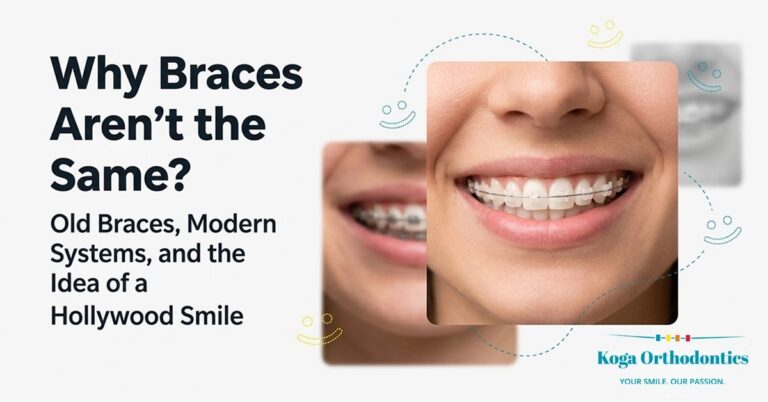
Many people believe that braces are all the same.
Metal is metal. Wires are wires. Time does the rest.
But in orthodontics, that idea no longer reflects reality.
Just like cars, phones, or even medical treatments, braces have evolved. And that evolution changed not only comfort and efficiency, but also how a smile is planned and designed.
That’s why two people can wear braces for a similar amount of time and end up with very different smiles.
Why Some Smiles Look More Natural Than Others
You may have noticed that some orthodontic results look balanced, wide, and natural, while others look flat or artificial, even though the teeth are technically straight.
This happens because straight teeth alone do not define a beautiful smile.
A smile is influenced by several factors, such as:
- The curve of the teeth in relation to the lower lip
- How much of the teeth show when smiling
- The width of the smile
- How the teeth fit the face, not just each other
Modern orthodontics looks at all of these elements together, not in isolation.
Traditional Braces: What They Were Designed to Do
Os aparelhos ortodônticos tradicionais representaram um grande avanço na ortodontia. Seu principal objetivo era claro e eficaz: mover os dentes para um melhor alinhamento e melhorar a função da mordida.
They work well for that purpose.
No entanto, os sistemas mais antigos focavam-se principalmente no posicionamento dos dentes em linha reta. Ofereciam um controlo limitado sobre a largura do sorriso, o arco do sorriso e os detalhes estéticos mais subtis que influenciam a aparência do sorriso em fotografias e na vida real.
In many cases, the result was healthy and functional, but not always optimized for facial harmony.
Modern orthodontic systems and smile design.
Newer orthodontic philosophies changed the way treatment is planned.
Instead of asking only “How do we straighten these teeth?”, modern systems ask:
“How should this smile look when treatment is finished?”
This shift allows orthodontists to plan tooth movement with aesthetics in mind from the very beginning, not just at the end.
Bracket positioning, arch form, and biomechanics are used to support a more natural smile shape, better smile width, and a smoother smile arc.
What People Mean by “Hollywood Smile”
The term “Hollywood smile” is often misunderstood.
It does not mean unnaturally white teeth or identical smiles.
It refers to a smile that looks balanced, confident, and harmonious with the face.
A smile often described this way usually has:
- A gentle curve that follows the lower lip
- A wider appearance with fewer dark spaces at the corners
- Teeth that show naturally when smiling
- Proportions that fit the person’s facial structure
These characteristics are not created by chance. They come from planning.
How Philosophy and Systems Influence the Final Result
Modern orthodontic philosophies, such as the Pitts approach, focus on designing the smile rather than forcing teeth into position.
They emphasize:
- Smile arc preservation
- Controlled smile width
- Facial balance
- Efficient and comfortable tooth movement
This does not mean that one system is “right” for everyone. It means that the tools and philosophy used during treatment influence what is possible to achieve.
The orthodontist’s planning and experience remain the most important factors.
Why This Matters for Patients and Families
Understanding that braces are not all the same helps patients make more informed decisions.
Orthodontic treatment is not only about straight teeth. It affects how you smile, how you feel, and how your smile fits your face for years to come.
As orthodontics continues to evolve, treatment planning becomes more personalized, intentional, and focused on long-term results, not just alignment.
How This Approach Fits at Koga Orthodontics
At Koga Orthodontics, treatment planning goes beyond simply straightening teeth.
Each smile is evaluated individually, considering facial balance, comfort, and long-term oral health. Depending on the patient’s needs, treatment may include Pitts 21 braces, a modern self-ligating system designed to support efficient tooth movement and detailed smile planning; Spark clear aligners, a more discreet option for patients who want removable treatment with a cleaner look; or WildSmiles for younger patients, which adds a more personalized and kid-friendly element to braces treatment.
The goal is always to create a smile that looks natural, functions well, and fits the person wearing it.
Orthodontics is a journey. Having the right plan from the start makes all the difference.
Frequently Asked Questions
Q: Are modern braces faster than traditional braces?
A: Treatment time depends on many factors, including the individual case and patient cooperation. Modern systems are designed to be more efficient and comfortable, but timelines vary from person to person.
Q: Does everyone get a “Hollywood smile” with modern braces?
A: No. “Hollywood smile” is a concept, not a guarantee. The final result depends on facial structure, dental anatomy, and personalized treatment planning.
Q: Are traditional braces bad?
A: Traditional braces are effective and have helped millions of people. Modern systems simply offer additional tools to focus more on aesthetics and comfort.
Q: How do I know which type of braces is right for me or my child?
A: The best option depends on individual needs, goals, and clinical evaluation. An orthodontic consultation is the best way to explore appropriate options.
Conclusion
In Northeast Louisiana, Koga Orthodontics provides orthodontic care designed for different stages of life. From braces for children, to treatment options for teens, adults, and seniors, each plan is created with individual needs, comfort, and long-term results in mind.
Orthodontic treatment is not one-size-fits-all. The right approach starts with understanding the smile, the face, and the goals behind the treatment.
If you’re considering braces for yourself or a family member, a consultation can help clarify which options make the most sense for your situation and expectations.
Schedule a consultation to learn more about personalized orthodontic care.