

An orthodontist is a dental specialist who focuses on diagnosing and correcting problems with tooth alignment and jaw position. If your teeth are crowded, gapped, or your bite feels off, an orthodontist is the right professional to see.
While your general dentist keeps your teeth healthy, an orthodontist is specifically trained to move teeth and guide jaw development. It’s a different skill set — and for many people, it makes a real difference in both function and confidence.
How is an orthodontist different from a dentist?
Both are dental professionals, but their training and focus are distinct.
A general dentist handles cleanings, fillings, crowns, and overall oral health. An orthodontist completes dental school and then continues with two to three additional years of specialized training focused entirely on tooth movement, bite correction, and facial structure.
Think of it this way: a dentist is like your primary care physician. An orthodontist is the specialist you see when there is a specific structural issue that needs targeted treatment.
What does an orthodontist actually treat?
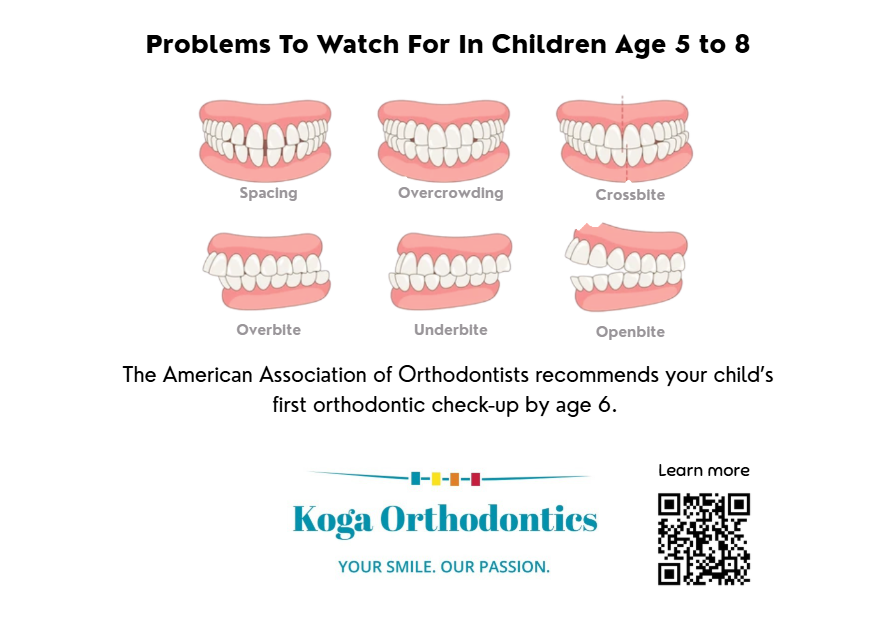
Malocclusion — the technical term for a misaligned bite — is the most common reason for referral to an orthodontist. It shows up in many forms, and most people are surprised to find out how many everyday issues trace back to it.
Some of the most common conditions orthodontists treat include:
- Crowded teeth — when there isn’t enough space in the mouth for all teeth to fit properly
- Overbite — upper teeth extend too far over the lower teeth
- Underbite — lower teeth sit in front of the upper teeth when the jaw closes
- Crossbite — some lower teeth fall outside the upper teeth during closure
- Open bite — upper and lower front teeth don’t meet when the jaw closes
- Spacing issues — gaps between teeth that affect appearance or hygiene
- TMJ-related discomfort — jaw pain or clicking that may be linked to misalignment
These aren’t just cosmetic issues. Correcting moderate or severe malocclusion can make teeth easier to clean, decrease the risk of tooth decay and periodontal disease, and eliminate strain on the teeth, jaws, and muscles — which may also reduce symptoms of temporomandibular joint disorders.
When should you see an orthodontist?
You don’t need to wait until something hurts. Many orthodontic issues are easier to address when caught early — especially in children, whose bones and teeth are still growing.
The American Association of Orthodontists recommends that children have their first orthodontic evaluation by age 7. At Koga Orthodontics, we encourage parents to bring children in between ages 5 and 8 — recent research supports earlier screening in some cases, and an early look can reveal growth-related issues that are far easier to guide while the jaw is still developing.
That said, orthodontic treatment isn’t just for kids. According to the American Association of Orthodontists, one in three orthodontic patients today is an adult, and that number continues to grow. Straighter teeth are easier to maintain, and correcting a bite can relieve discomfort and improve how you speak and chew — regardless of age.
Some signs that it may be time for an evaluation:
- Teeth that visibly overlap or are crowded
- Difficulty chewing or biting into certain foods
- Jaw pain, clicking, or discomfort
- Mouth breathing or snoring (especially in children)
- A child’s baby teeth falling out too early or too late
- Self-consciousness about the appearance of a smile
What does orthodontic treatment look like?
Every patient is different, which is why orthodontic treatment always starts with an assessment. The orthodontist will examine the teeth, take images or digital scans, and build a plan based on the patient’s specific needs.
Treatment options typically include:
- Braces — brackets bonded to the teeth and connected by a wire that gradually shifts alignment over time
- Clear braces — similar in function, but with tooth-colored or clear brackets that are less noticeable
- Clear aligners — removable, transparent trays that move teeth without brackets or wires
- Palatal expanders — devices used to create space for growing teeth in younger patients
- Retainers — worn after treatment to keep teeth in their new positions
The right option depends on the type and severity of the issue, age, lifestyle, and personal preferences. An orthodontist will walk through what makes the most sense before anything is decided.
What makes a good orthodontist?
Beyond clinical training, the best orthodontists combine technical expertise with the ability to explain things clearly and make patients feel at ease. Treatment can take one to three years, so the relationship built with your provider matters.
At Koga Orthodontics, Dr. Liseane Koga brings that combination of precision and care to every patient. She uses Pitts21 self-ligating brackets for accurate tooth movement, WildSmiles brackets for a more personalized experience for kids, and Spark Clear Aligners for adults looking for a discreet option. Her published research on misalignment and early intervention reflects a commitment to evidence-based care that goes well beyond routine practice.
Outside the office, Dr. Koga is deeply connected to Northeast Louisiana — its culture, communities, and people. That local presence shapes the kind of practice Koga Orthodontics has become: one where patients are treated like neighbors, not just cases.
Locally owned matters. Most orthodontic practices in the Monroe area are corporate offices and large chains, where treatment decisions are often shaped by out-of-state ownership. Koga Orthodontics is family-owned and independently operated — offering personalized care, the latest technologies, and treatment tailored to each patient rather than a corporate template.
What treatments does Koga Orthodontics offer?
Knowing what an orthodontist does is one thing. Knowing what to expect at a specific practice is another. Here is a quick overview of the treatments available at Koga Orthodontics for families across Northeast Louisiana.
Braces for kids. Dr. Koga uses Pitts21 self-ligating brackets for precise, efficient tooth movement, and WildSmiles brackets that let kids personalize their look — turning something that can feel intimidating into something they are actually excited about. Treatment at a young age can often prevent the need for more invasive procedures later, like extractions or jaw surgery.
Braces for adults and seniors. Adults and seniors are welcome at every Koga location. The same Pitts21 technology used for younger patients delivers accurate, controlled results for adults — whether the goal is correcting a longstanding bite issue, improving oral hygiene, or simply feeling more confident in a smile.
Clear aligners. For patients who want a discreet path to straighter teeth, Koga Orthodontics offers Spark Clear Aligners — a premium removable aligner option that is nearly invisible during wear. Spark aligners can be taken out for meals and cleaning, making them a practical choice for adults with busy schedules.
Bite and jaw correction. Not every orthodontic issue is just about straight teeth. Koga Orthodontics also treats bite and jaw alignment problems — from overbites and crossbites to open bites and underbites. The approach is always minimally invasive first, with surgery only recommended when other options have been fully considered.
Airway-focused orthodontics. Orthodontic treatment is not only about straight teeth — it can also play a meaningful role in how well a patient breathes. A narrow upper jaw often means less room in the nasal cavity and a smaller airway, which is linked to mouth breathing, snoring, and restless sleep. Koga Orthodontics uses airway-focused strategies to widen the upper jaw and support easier breathing. For younger patients especially, treating airway issues early can influence facial development, sleep quality, and daytime focus.
Retainers. Koga Orthodontics is the only orthodontic office in the region with a dedicated in-house lab for retainers. That means custom-made retainers — lingual, clear, or Hawley — delivered faster and with a more precise fit. Because maintaining results is just as important as achieving them.
Is orthodontic treatment worth it?
For most people, yes — and the benefits go beyond a straighter smile. Properly aligned teeth are easier to brush and floss, which reduces the risk of cavities and gum disease. A corrected bite distributes chewing forces more evenly, protecting teeth from wear over time. And for many people, the confidence that comes with a smile they feel good about has a real effect on daily life.
For children, starting at the right time can prevent more complex treatment later. For adults, it is never too late to address issues that have been bothering you for years.
Frequently Asked Questions
What’s the difference between an orthodontist and a dentist? A dentist handles general oral health — cleanings, fillings, and overall care. An orthodontist is a dental specialist with additional training focused exclusively on correcting tooth and jaw alignment. Both are important, but they serve different roles in your care.
At what age should my child see an orthodontist? The American Association of Orthodontists recommends a first evaluation by age 7, when permanent teeth are starting to come in. Recent research suggests even earlier screening — around age 5 — can be valuable in some cases. At Koga Orthodontics, we typically recommend bringing children in between ages 5 and 8 for an initial look. An early evaluation does not mean treatment is needed right away; in most cases, we simply monitor growth and step in only when it will actually help.
Can adults get orthodontic treatment? Yes. There is no age limit for orthodontic care. As long as teeth and gums are healthy, adults can benefit from braces or clear aligners just as much as younger patients.
How long does orthodontic treatment take? It depends on the case, but most comprehensive orthodontic treatment falls within a 10-to-30-month range. Some minor corrections can be completed in under a year; complex cases may take up to two and a half years. A realistic timeline is provided after the initial evaluation.
Are there any red flags to watch for when choosing an orthodontist? Yes, a few things should give you pause:
- Unusually low pricing. If the price is well below the local market, something is often being cut — supervision, technology, or treatment scope.
- A plan that only treats the upper or lower arch. With rare exceptions, correcting alignment and bite requires working with both arches together. A single-arch plan is frequently a cosmetic shortcut, not a complete correction.
- Timelines much longer or shorter than 10–30 months. Plans that stretch far beyond two and a half years are sometimes structured that way to allow lower monthly payments — not because the case requires it. Treatment dragged out unnecessarily raises the risk of relapse, root resorption, and patient burnout. If a timeline feels off, a second opinion is always worth it.
Does it hurt to get braces or aligners? Some pressure or mild soreness is normal, especially in the first few days or after adjustments. Most patients find it manageable and short-lived. Clear aligners tend to feel more comfortable than traditional braces for many people.
Understanding what an orthodontist does is the first step toward knowing whether you — or your child — could benefit from treatment. Most issues are treatable, and the earlier they are identified, the more options are available. If you are in Northeast Louisiana and have questions about your smile or your child’s development, the team at Koga Orthodontics is happy to take a look. A simple consultation can answer a lot.